Primary Education 3-11 (with QTS with Foundation Year) BA (Hons)
Undergraduate
- Start date
- September 2026
- Study mode
- Full-time
- Course length
- 4 years
- UCAS Code
- X30F
Interested in a different start date?
Course overview
Discover how professional development supports inclusive practice and classroom confidence.
The BA (Hons) Primary Education 3–11 with Recommendation for QTS at Victoria University offers an inspiring and values-led route into the teaching profession. If you are passionate about supporting children’s development and helping every learner flourish, this course provides both the academic grounding and practical experience you need. You will explore how children learn across the primary age range, while developing essential skills in lesson planning, classroom management and inclusive teaching.
From your first day, you will be part of a university community that empowers you to grow, reflect and lead with integrity.
Book a free consultation
Not sure which course fits your goals? Book a free consultation with an Academic Life Coach today
Foundation Year at Victoria University
The Foundation Year is the first year of a four-year undergraduate degree at Victoria University. It offers a flexible route into higher education for students who may not meet standard entry requirements or who are returning to study after time away. Whether you are exploring a new direction or looking to strengthen your academic foundations, this additional year of study provides the structure, support and space to help you succeed.
You’ll apply through UCAS for your chosen degree with Foundation Year. Once you’ve successfully completed the Foundation Year and met the progression criteria, you’ll move into Year 1 of your undergraduate course.
Who is the Foundation Year for?
This route is designed for students who:
• Are returning to education after a break
• Do not currently hold the qualifications for direct entry
onto a three-year degree
• Want to build confidence and academic skills before starting undergraduate
study
• Are seeking a structured and supportive introduction to university life
You’ll be part of a learning community that recognises your potential and supports your development from the very beginning. The Foundation Year is not just a pathway into university. It is a purposeful and personalised start to your academic journey.
What will I study?
The Foundation Year focuses on helping you become a confident, reflective and independent learner. You’ll begin by exploring how you learn and identifying strategies that work for you. You’ll also engage with wider themes such as identity, inequality and the human experience in a digital world. These topics encourage critical thinking and personal insight, while connecting across subject areas.
You’ll develop core academic skills including writing, research, digital literacy and communication. These are taught through seminars, workshops, online activities and one-to-one support. The aim is not only to prepare you for your chosen subject, but to help you feel connected to your learning and to the university community.
‘For someone returning to education after a hiatus, this foundation (year) was essential in helping me regain my academic footing and feel prepared for the challenges ahead.’ – Alix Wyatt, Victoria University Alumna
What happens after the Foundation Year?
Once you’ve successfully completed the Foundation Year and met the progression requirements, you’ll begin Year 1 of your undergraduate degree. You’ll already be familiar with the university environment, your subject area and the expectations of academic study, giving you a strong foundation to build on.
Why study this course?
This course is ideal for individuals who are passionate about making a difference in children’s lives and want to pursue a meaningful and rewarding career in education. Whether you are just beginning your journey into teaching or returning to study with experience, the BA (Hons) Primary Education 3–11 with Recommendation for QTS offers a values-led and professionally grounded route into the classroom. It combines academic depth with practical experience, enabling you to develop the knowledge, skills and confidence needed to support all learners.
With a strong emphasis on inclusive practice, reflective teaching and real-world relevance, the course prepares you to thrive in a variety of educational settings and contribute positively to school communities.
‘Undertaking this programme will not only train you to become a competent and confident primary school teacher, but it will also train you to become a Victoria teacher. A Victoria teacher has the child at the centre of everything they say and do.
The programme will equip you with a deep understanding of how children develop and learn as well as providing you with a range of current and research-led pedagogy to use to provide the best possible education for the children you teach in your rewarding career in teaching.’ Steve Patrick B.Ed (Hons) M.Ed PGCHE FHEA), Undergraduate – Primary ITE Programme Lead
Explore the Foundations of Effective Teaching
Throughout the course, you will study the full primary curriculum, including English, Mathematics, Science and foundation subjects, alongside essential areas such as child development, safeguarding and professional standards. You will also engage with key educational frameworks, including the National Curriculum, the Early Years Foundation Stage and SEND guidance, developing strategies to support diverse learners with care and confidence.
In the second year of the undergraduate programme, trainees undertake a placement within Special Educational Needs and Disabilities (SEND) or alternative provision. This experience broadens their understanding of inclusive practice and supports the development of skills for meeting diverse learner needs. It also provides valuable insight into specialist education pathways, helping trainees to explore potential future roles within SEND and alternative education contexts.
Practical experience is woven into your learning through school placements, ITAP weeks and interactive workshops that mirror the realities of classroom life. These opportunities help you to build your teaching toolkit, develop your professional identity and prepare for a wide range of roles in education.
Supportive and Personalised Learning
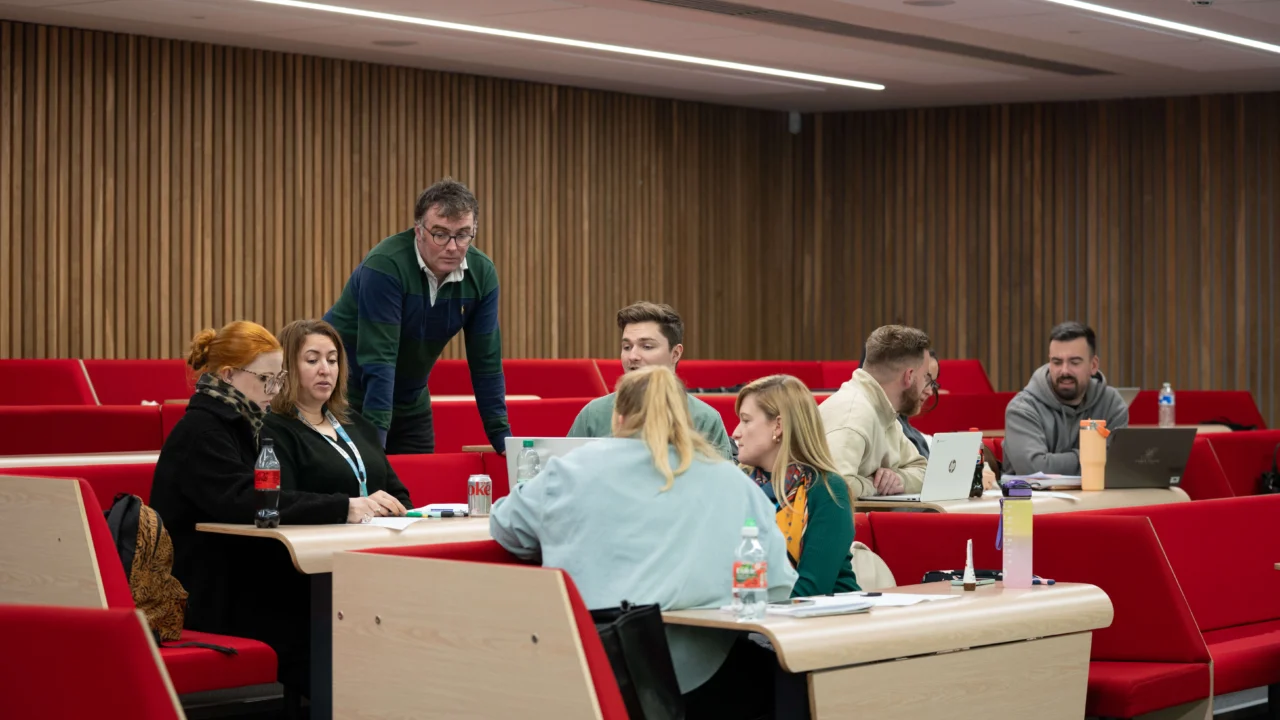
At Victoria University, you will be part of a close-knit and inclusive academic community that places your personal and professional development at the heart of everything we do. The course is delivered by experienced educators who are committed to supporting your growth as a reflective and confident practitioner.
With small group teaching, regular feedback and one-to-one mentoring, you will be encouraged to explore your strengths, overcome challenges and find your teaching voice. This supportive environment empowers you to take ownership of your learning and progress with clarity and purpose, whether you choose to work in mainstream, SEND or faith-based settings, or pursue further study or leadership roles.
Got a question you’d like to ask?
Entry requirements
We welcome students from all backgrounds and accept a wide range of qualifications. If yours aren’t listed, don’t worry – our Admissions Team can help you explore your options. See full entry requirements.
Entry requirements, for UK home students, for September 2026 entry: 48 UCAS points.
Different degree pathway options available at the end of the foundation year may have different additional entry requirements.
If you require any further information or clarification of entry requirements please contact our friendly, helpful Admissions department, who will be happy to help.
Specific GCSE requirements:
• GCSE/IGCSE English language and maths grades 9-4/A*-C or equivalent
• GCSE/IGCSE science grade 9-4/A*-C or equivalent
Other English Language qualifications are also accepted. Please contact admissions for further information.
Non-Academic Requirements:
Success at Interview. The Admissions team will use the course entry requirements, as well as your personal statement, reference and any work experience information, to shortlist and invite successful candidates for interview. Candidates will be assessed at interview on their motivation and understanding of the role of a teacher. You will also be required to complete an end of year interview in order to progress onto year one.
Occupational Health Clearance. Candidates must receive a satisfactory occupational health clearance prior to commencing the course.
DBS Clearance. Candidates must receive a satisfactory Disclosure and Barring System check prior to commencing the course.
Fitness to Train to Teach Clearance. Candidates must receive a satisfactory Fitness to Train to Teach check prior to commencing the course.
Please contact Admissions if you have any questions.
Course fees
The tuition fee for academic year 2026/27 is: £5,760. Tuition fees for courses starting April to May 2026, fall within the 2025/26 academic cycle.
Fees for the 2025/26 academic year can be found on our Student Finance pages.
Additional costs
The University will review tuition fees and increase fees in line with any inflationary uplift as determined by the UK Government, if permitted by law or government policy, in subsequent years of your course. It is anticipated that such increases would be linked to RPI (the Retail Price Index excluding mortgage interest payments).
Placement information
Placements are a central part of your development on this course, giving you the opportunity to apply your learning in real classroom settings across the full primary age range, including 3 to 7, 5 to 11 and 7 to 11. Each year, you will undertake school placements that are carefully structured to build your confidence and competence over time.
You will be supported throughout by experienced school-based mentors and university tutors who offer personalised feedback and guidance. In addition to placements, undergraduate trainees take part in six Intensive Training and Practice (ITAP) weeks across the three years of study, with two ITAPs per year. These focus on key areas such as behaviour management, assessment for learning, SEND inclusion and phonics and early reading. These experiences are designed to deepen your understanding of effective teaching and prepare you for the realities of the profession.
What careers can I consider
Upon successful completion, you will be awarded Qualified Teacher Status (QTS), confirmed by the Department for Education. Victoria graduates are highly regarded across the UK for their creativity, commitment and sense of purpose.
Whether you choose to teach in mainstream, SEND or faith-based settings, or pursue leadership or further study, you will be equipped to make a meaningful difference in children’s lives. You’ll also join a dynamic network of educators who continue to support and inspire one another well beyond graduation.
Accreditations and exemptions
Upon successful completion of the course and demonstration of the Teachers’ Standards, you will be awarded Qualified Teacher Status (QTS), confirmed by the Department for Education.
Victoria University is recognised by Ofsted as a GOOD provider of Initial Teacher Education (2024), reflecting the quality of its academic teaching and placement support. While the course does not offer exemptions from other professional bodies, it provides a strong foundation for continued professional development, including progression to postgraduate qualifications such as the MA Education. It also opens pathways into leadership roles and specialist areas within the education sector.